All Articles
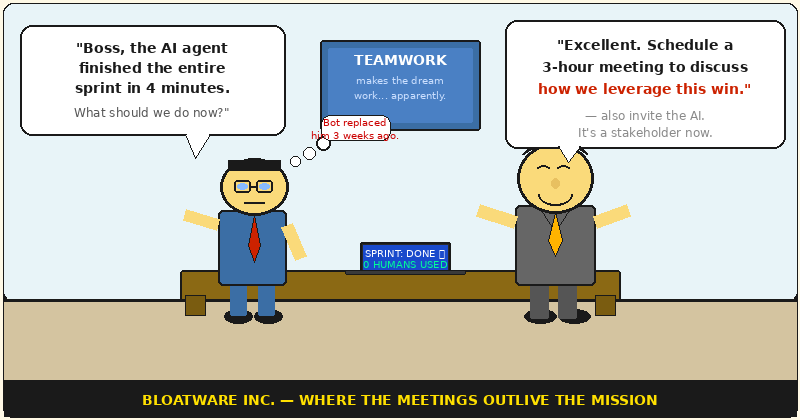
Impact of AI on Management Jobs, Role Descriptions and Your Whole Existence Till Date in Tech Industry
DISCLAIMER FOR THE SENSITIVE SOULS If you are a manager whose primary skill is “facilitating a sync,” or “getting the work done”, please stop reading now. The following content contains high doses of reality that may cause your LinkedIn “Top Voice” badge to spontaneously combust. No “synergy” was harmed in the writing of this article, mostly because synergy isn’t real.
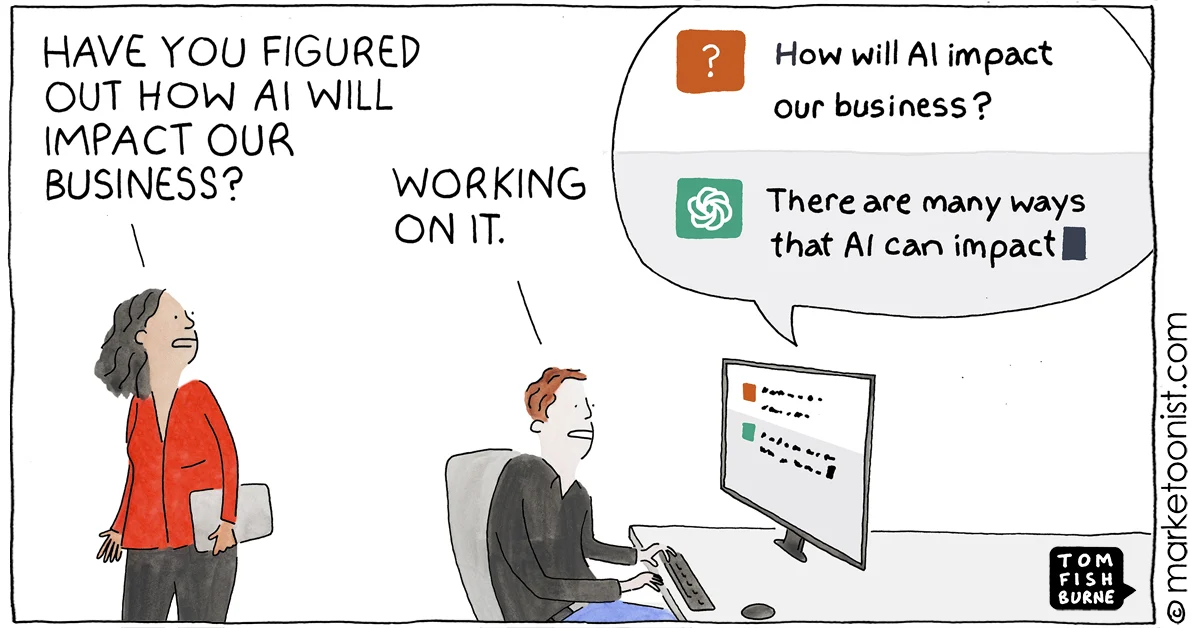
AdTech's AI Reckoning: A Kodak, or Blackberry Moment?
The global advertising industry is not dying; in fact, it is thriving. Global advertising spend is forecast to surpass an unprecedented $1 trillion for the first time in 2026, while the digital advertising sector alone is projected to exceed $350 billion by 2030. AdTech as an industry segment will undeniably remain and continue to expand.
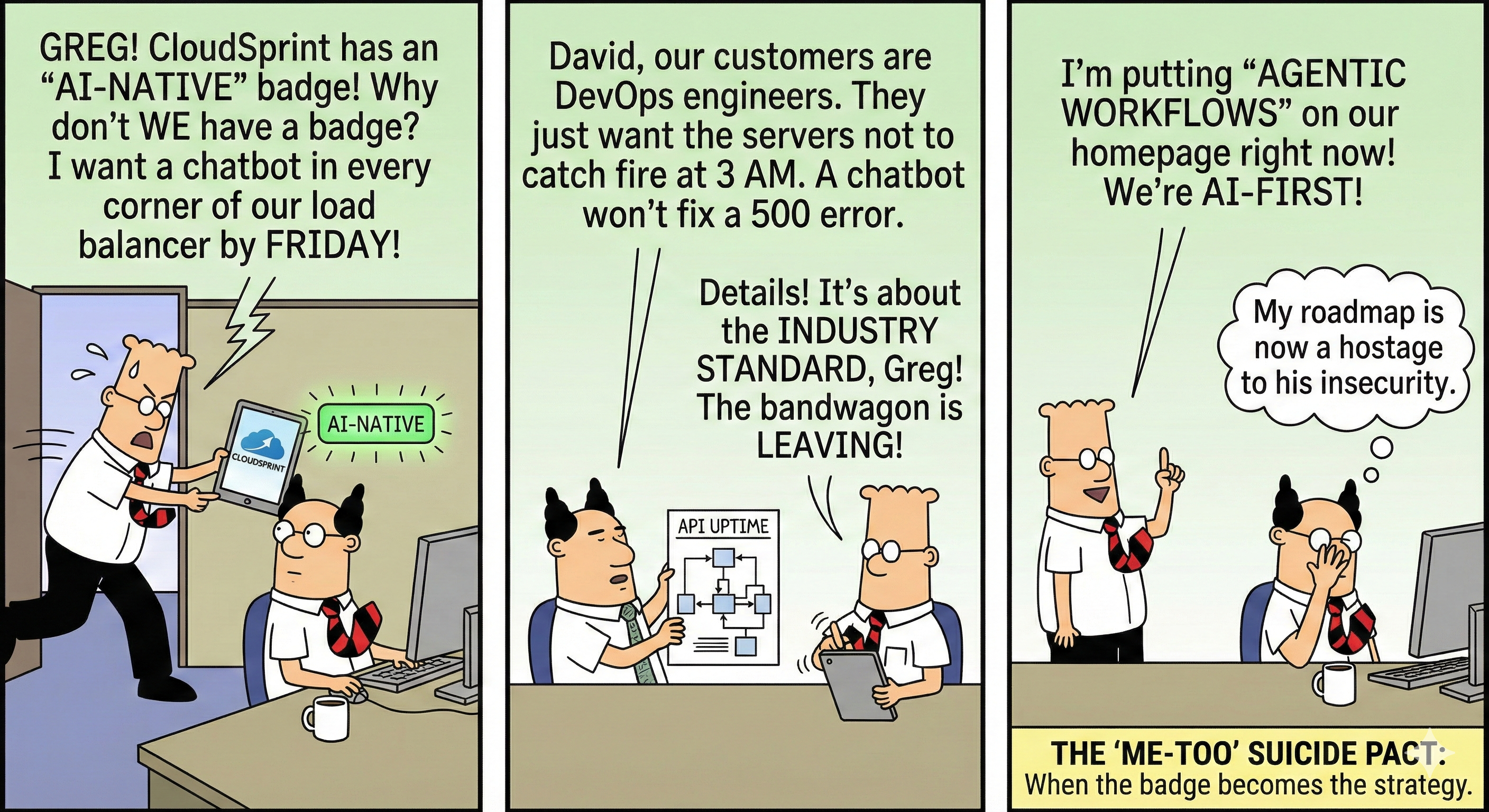
The AI "Me-Too" Tsunami : Why First Principles is Your Only Lifeboat to Survive the Tectonic Shift
David stood in front of a mirror in the executive washroom of NeoScale, practicing what he called his “visionary squint.” He was the founder of a startup that managed cloud infrastructure, a job that mostly involved keeping servers from catching fire while convincing VCs that the fire was actually a feature of high performance.
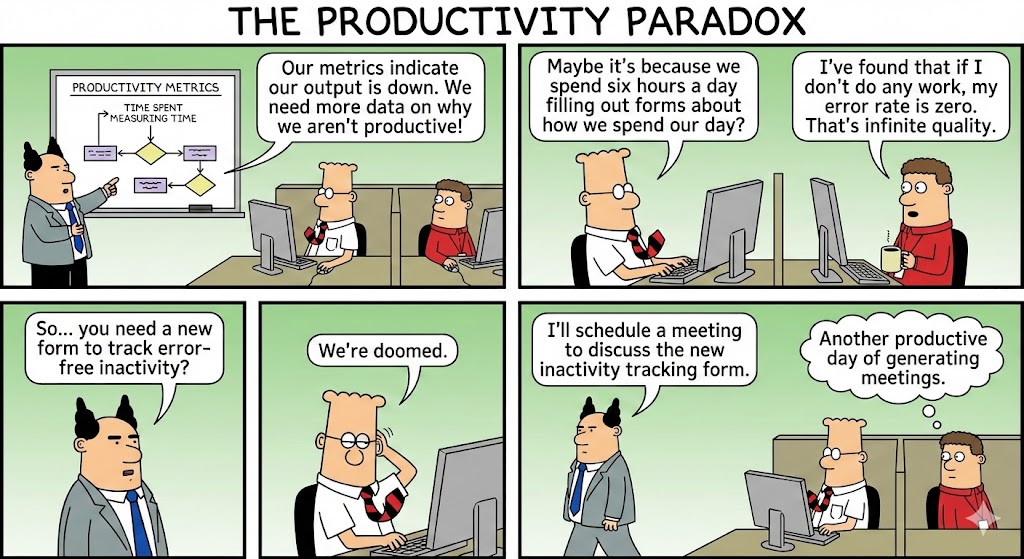
Why Your Product Company is Just a Body Shop in a Hoodie: The Productivity Paradox
The boardroom at ZenithTech didn’t just smell like expensive espresso and desperation; it smelled like the collective anxiety of three hundred people trying to sprint through a swamp. Sanjay, the CEO, was vibrating with a specific kind of “Founders’ Anxiety” that usually precedes a catastrophic pivot or a very expensive divorce.
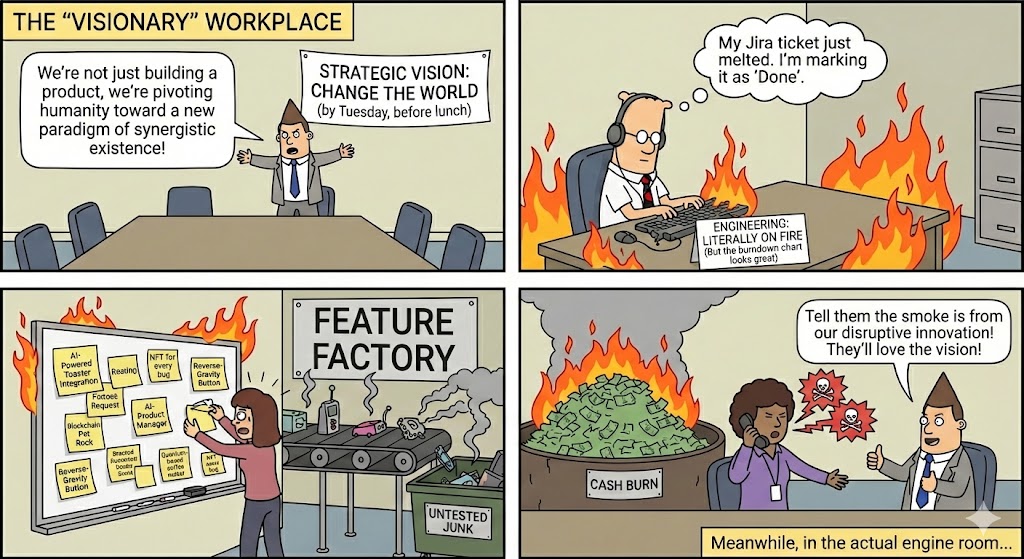
The Blood Sport of Ruthless Execution and the Strategy of Saying No
LEGAL DISCLAIMER AND SURVIVAL GUIDE: The following article is a work of high-octane, hallucinogenic fiction. If you read a sentence and think, “Wait, that sounds exactly like my Monday morning stand-up,” that is just your suppressed corporate trauma speaking. Any resemblance to actual persons (living, dead, or currently wearing a Patagonia vest in a coworking space), actual companies, or actual “game-changing” cloud telephony startups is entirely coincidental—in the same way that a power cut in Bangalore hitting exactly when you have a critical deployment is a “coincidence.
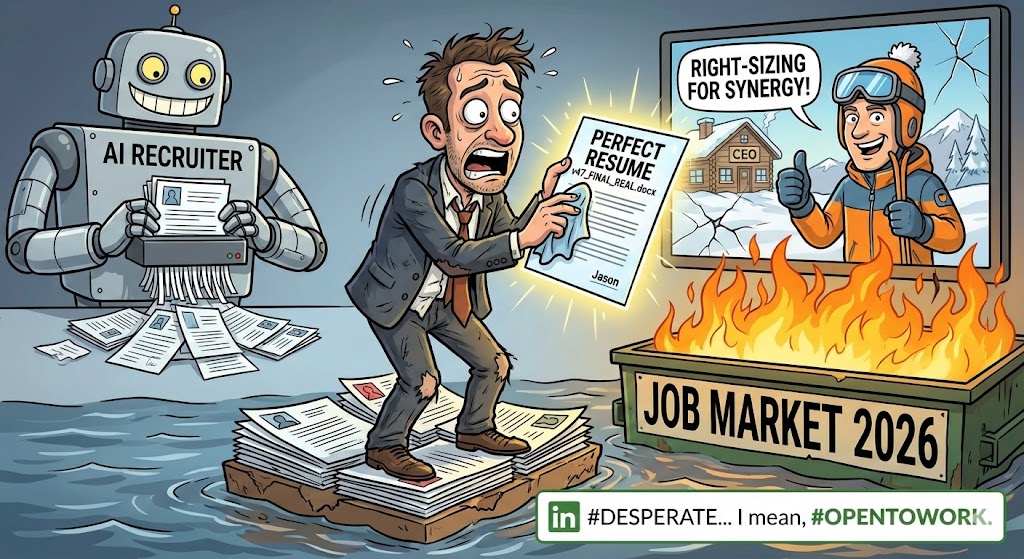
Congratulations on Your Perfect Resume. Now Let's Talk About Your Actual Career.
Why fixing your font size won’t save you from the Algorithm, and why you need a GPS, not a prayer. Try CareerPlot if you haven’t. Part I: The Funeral of a Job Title Let’s start with a scene you probably know too well. Let’s talk about Jason. Jason is a Product Lead at a mid-sized tech company.
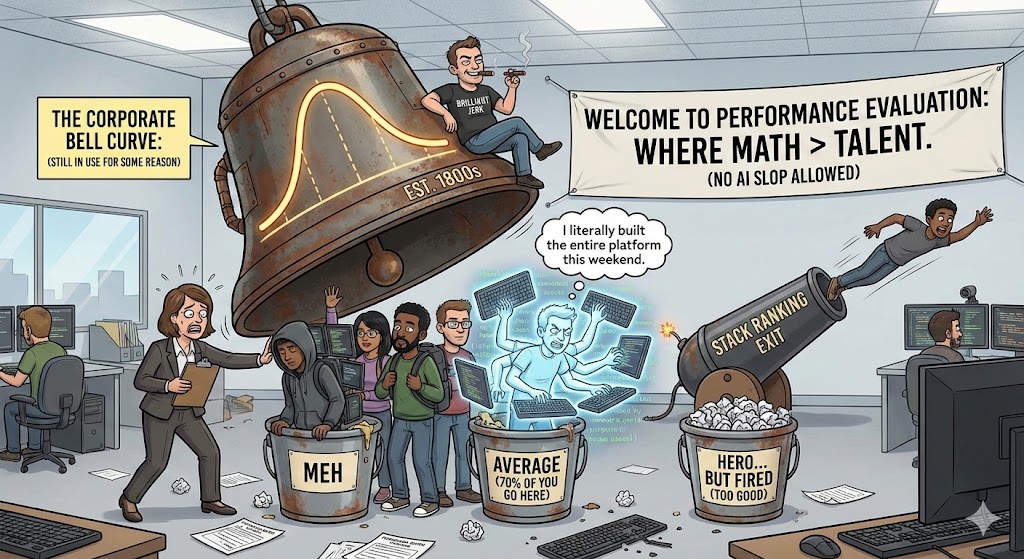
The Annual Hunger Games : Appraisals Are Round The Corner! Get Ready !!
Lock your doors, hide your high-yield coffee beans, and delete your search history for “how to explain a 4% raise during 8% inflation.” It’s that magical time of year again: The Annual Appraisal Cycle. Forget The Last of Us or Squid Game; those are rom-coms compared to the psychological warfare of the Corporate Finance Bell Curve.
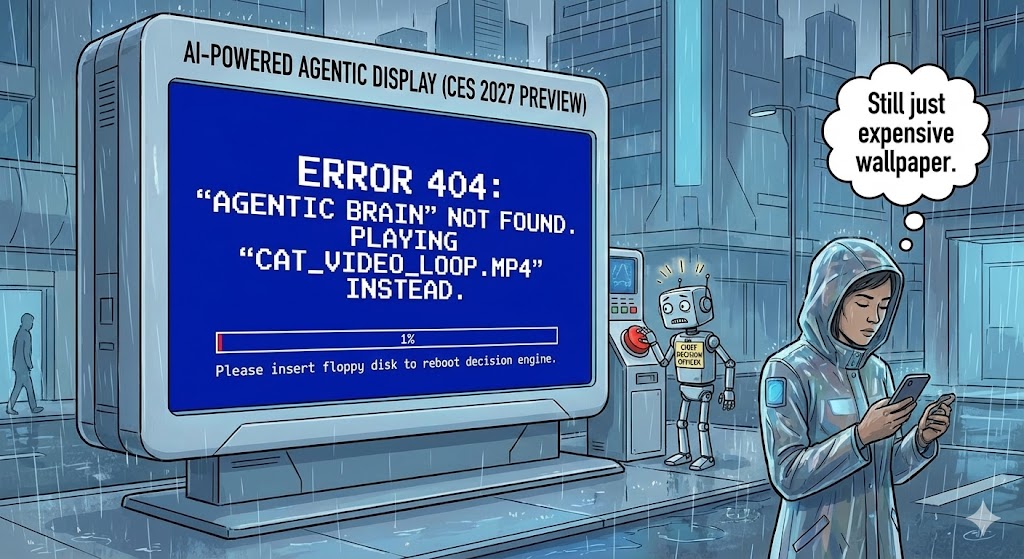
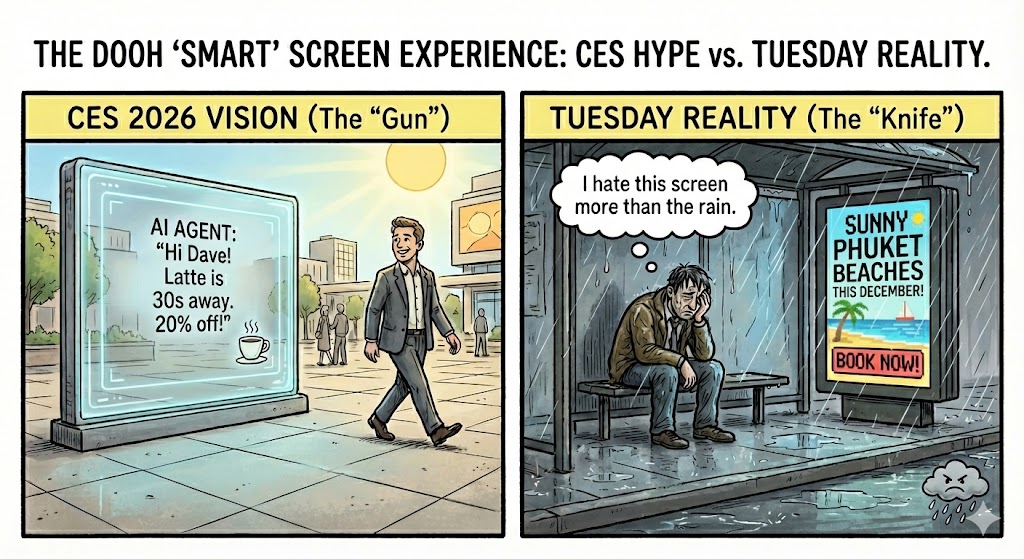
Rearchitecting DOOH: Moving From Expensive Wallpaper to Agentic Decision Engines (Post CES 2026 Effect)
The Epilogue to the Rainy Tuesday: 2027 Edition Let’s fast forward to that same rainy Tuesday in November 2027. The bus shelter hasn’t moved, but the brain inside it has been lobotomized and replaced. The rain starts falling. The crowd gathers. This time, the screen doesn’t play a perfume ad.